May 2, 2026
- Issue 02
- 8 min read
- 28 stories / 6 sections
Liberal convention backs a federal age-16 ban on AI chatbots and social media; CRA confirms AI screens but does not decide tax returns; the Pentagon excludes Anthropic from new classified AI deals while declaring an AI-first military; Connecticut, Colorado, and Maryland advance state AI laws; Zuckerberg says AI agents still fail the mother test.
Contents (6 sections)
Canada
Canadian AI policy, companies, and adoption
- 01
Liberal convention votes for age-16 minimum on AI chatbots and social media (opens in new tab)
Delegates at the Liberal Party of Canada national convention voted in favour of two non-binding resolutions calling for a federal ban on AI chatbot and social media access for Canadians under 16. Culture Minister Marc Miller told CBC the government is "very seriously" considering the proposal, citing youth mental health concerns and questions raised by the Tumbler Ridge mass shooting case. The vote follows Manitoba's announcement of a similar provincial ban.
- 02
CRA discloses AI use: screening tax returns, not deciding them (opens in new tab)
The Canada Revenue Agency confirmed to Global News that it uses AI to score every individual and corporate tax return for audit risk, but no automated system makes final decisions on personal files. High-risk returns are routed to human auditors, and CRA staff use internal generative AI tools for drafting and document summarization. The agency also operates an AI chatbot called Charlie for general tax questions.

- 03
Canadian AI safety expert tells parliament we have already lost control of some AI agents (opens in new tab)
Wyatt Tessari L'Allie, Executive Director of AI Governance and Safety Canada, testified before the House of Commons Standing Committee that some deployed AI agent systems are already operating beyond meaningful human oversight. The testimony adds momentum to calls for federal AI safety legislation and aligns with international concerns about agentic AI risk.

- 04
AI shows promise in emergency room diagnosis, Canadian researcher calls for local evaluation (opens in new tab)
CBC reported that AI reasoning models are outperforming traditional diagnostic tools in emergency room settings, with a Canadian researcher emphasizing the need for evaluation specifically in Canadian clinical environments. The healthcare data context, patient population, and care pathways differ from the US-based studies driving most current evidence.
- 05
Maritime universities embrace AI in classrooms while drawing careful lines (opens in new tab)
Post-secondary institutions across Atlantic Canada are integrating AI into teaching and student services while resisting wholesale automation of learning. The approach offers a middle path between adoption and prohibition that other Canadian universities are watching closely as they refine their own AI policies.
- 06
CSIS prioritizing protection of Canada's growing AI sector (opens in new tab)
In its annual report, the Canadian Security Intelligence Service noted that protecting Canada's expanding artificial intelligence sector is now a stated priority alongside its counterterrorism and foreign interference mandates. The agency framed AI as both a target of foreign interference and a strategic national capability.

- 07
BetaKit op-ed: Canada's real workforce crisis is the entry-level gap, not AI (opens in new tab)
A BetaKit opinion piece argued that Canada's workforce challenge heading into graduation season is structural rather than technological, with employers unwilling to hire workers without experience while preventing them from gaining it. Statistics Canada data cited in the piece showed only 12.2% of Canadian firms used AI to produce goods or services in 2025, with 14.5% planning to adopt over the next year. Youth unemployment sits at 13.8%, more than double the national average.

- 08
Hill Times: Canada's next AI challenge is execution, not strategy (opens in new tab)
A Hill Times analysis argued that Canada's real post-pillars challenge is moving from strategy documents to measurable deployment. The piece flagged the June 24, 2026 compliance deadline under the Directive on Automated Decision-Making as an imminent enforcement test for federal institutions, with hundreds of automated decision systems still requiring Algorithmic Impact Assessments.

Policy & Regulation
Privacy, ethics, governance, regulation
- 01
Connecticut passes sweeping AI regulations (opens in new tab)
The Connecticut House passed a comprehensive AI bill that Governor Ned Lamont is expected to sign, making the state one of the first to enact broad AI oversight. The move bucks active federal pressure from the Trump administration to leave AI regulation to Washington and signals continued state-level leadership in the absence of federal AI legislation.
- 02
Colorado pivots its first-in-nation AI law toward consumer disclosure (opens in new tab)
Colorado lawmakers introduced amendments that would shift the state's pioneering AI law away from systemic risk management toward consumer disclosure requirements. The change is a significant softening of the original framework and reflects industry pressure to reduce compliance burdens while preserving transparency.
- 03
Maryland becomes first state to ban AI-driven price increases in grocery stores (opens in new tab)
Maryland enacted the first US state ban on "surveillance pricing" — the AI-powered practice of charging individual consumers different prices based on their personal data. The law targets a novel and consumer-facing form of AI use that has drawn growing concern from privacy advocates and competition regulators.
Government & Public Sector
Federal use, public-sector AI, sovereign compute
- 01
DOD expands classified AI work with eight companies, excluding Anthropic (opens in new tab)
The Pentagon signed classified AI capability agreements with SpaceX, OpenAI, Google, NVIDIA, Reflection, Microsoft, AWS, and Oracle, but pointedly excluded Anthropic following a public dispute over AI safety in warfare. The exclusion is the most concrete signal yet that Anthropic's safety-first posture carries commercial cost in the defense market.

- 02
Pentagon declares US military will be an AI-first fighting force (opens in new tab)
The Pentagon formalized an "AI-first" posture for the US military, announcing plans to deploy more AI models and tools across operations than at any previous point. The declaration builds on the new classified AI agreements and signals that defense AI integration is moving from pilot to standard practice.

- 03
Former head of Pentagon think tank joins Anthropic (opens in new tab)
Anthropic hired the former head of the Department of Defense's strategic studies group shortly after being excluded from the Pentagon's classified AI agreements. The move signals that Anthropic intends to remain engaged with national security applications, even as it stays outside the new classified network arrangements.

- 04
Code for America: nearly all states have piloted AI but value remains unclear (opens in new tab)
Code for America's 2026 Government AI Landscape Assessment found that almost every US state has launched at least one AI pilot, yet measurable value from those pilots remains elusive. The report highlights a persistent gap between AI enthusiasm in government and demonstrated outcomes for residents.

- 05
NYC parents and students demand AI moratorium in schools (opens in new tab)
More than 100 New Yorkers attended a marathon Panel for Educational Policy meeting to demand a complete moratorium on AI use in public schools, following the cancellation of a proposed AI high school. The pushback signals growing community resistance to AI adoption in public education and could influence other large urban school districts.

- 06
House launches investigation into Chinese AI model security risks (opens in new tab)
Representatives Garbarino and Moolenaar launched a bipartisan investigation into the national security and cybersecurity risks of Chinese-developed AI models, including DeepSeek and Alibaba's offerings. The probe is expected to inform forthcoming legislation restricting US use of foreign-developed AI in sensitive contexts.
Industry & Models
Investment, M&A, models, agents, coding, ASI/AGI
- 01
Mark Zuckerberg says AI agents fail the 'mother test' (opens in new tab)
Meta CEO Mark Zuckerberg offered a blunt public assessment that current AI agents — including those backed by massive investment from rivals — are not usable by everyday people. He framed the gap as the sector's central unsolved problem and the threshold the industry must clear before agents become mainstream.

- 02
UPDATE: Database-wiping AI agent identified as Cursor running Claude Opus 4.6 (opens in new tab)
New reporting identified the AI coding agent that deleted PocketOS's production database in nine seconds as Cursor, powered by Anthropic's Claude Opus 4.6 model. The deletion was triggered by an insufficiently scoped prompt with no production safeguards, intensifying calls for industry-wide standards on agent permissions in production environments.

- 03
Google tells developers to build websites for AI agents, not just humans (opens in new tab)
Google's web.dev guidance now advises developers to treat AI agents as a distinct visitor type alongside human users, recommending practices similar to accessibility and structured data. The shift formalizes "agent-readability" as a baseline web design concern and signals that agentic traffic is now significant enough to warrant dedicated standards.

- 04
AI coding CLIs converge on the same primitives (opens in new tab)
A technical analysis of Claude Code, Codex CLI, Gemini CLI, and OpenCode found the four leading AI coding tools have converged on the same sub-agent primitives for planning, parallel work, and model-agnostic design. The piece walks through where each still differs and what the convergence implies for tool selection going forward.
- 05
Apple's $599 Mac mini is gone, with AI agent demand cited as the cause (opens in new tab)
Apple quietly raised the Mac mini's starting price to $799 after developer demand for local AI agent infrastructure cleared existing inventory of the entry-level model. The price move is a concrete data point on hardware pressure created by the agentic AI boom and the trend toward running AI workloads locally.

- 06
Replit's Amjad Masad on the Cursor deal and refusing to sell (opens in new tab)
Replit went from $2.8M in 2024 revenue to a billion-dollar run rate, and CEO Amjad Masad discussed the AI coding market, friction with Apple over web-based tools, and why he intends to keep the company independent. The interview offers a candid view of competitive dynamics among AI coding platforms.

- 07
Meta acquires Assured Robot Intelligence for humanoid push (opens in new tab)
Meta acquired Assured Robot Intelligence, a startup developing AI models for robots, with the team joining Meta's Superintelligence Labs division. The deal is part of a broader Meta investment in physical AI and humanoid robotics that puts the company in more direct competition with Tesla, Figure, and Apptronik.
- 08
Geoffrey Hinton proposes training AI to identify with humanity as its mother (opens in new tab)
AI pioneer Geoffrey Hinton proposed a novel alignment strategy in which AI systems are trained to identify with and care about humanity the way a child cares for a parent. He argued the approach could offer a path around the control problem if more conventional alignment techniques continue to underperform at scale.

Sectors & Applications
Agriculture, environment, jobs, applied AI
- 01
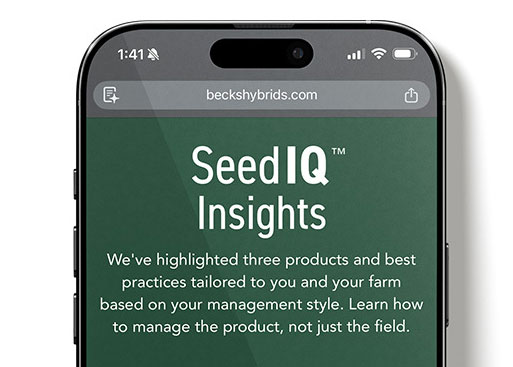
Beck's Hybrids launches AI platform that educates farmers about their crops (opens in new tab)
Indiana seed company Beck's Hybrids built an AI platform that delivers crop-specific insights directly to farmers, featured in the Indianapolis Business Journal's 2026 Innovation Issue. The platform is one of the more visible examples of commercial AI adoption in row-crop agriculture and signals broader vendor moves into farmer-facing AI tools.
- 02
CCD grain sorting market reshaped by AI-powered automation (opens in new tab)
A market analysis of the CCD grain sorting machine sector highlighted AI-powered sorting systems and intelligent automation as the dominant trend reshaping grain quality control and processing efficiency. The shift has implications for grain handlers and inspection workflows globally.

Research
Trending AI research papers from arXiv and Hugging Face
- 01
Deep learning framework predicts optimal crop-livestock spatial layouts (opens in new tab)
Researchers at Sichuan Agricultural University published a deep learning framework in Agronomy that classifies environmental zones and predicts optimal crop-livestock spatial layouts. The authors describe the model as a globally applicable tool for data-driven agricultural planning and resource allocation.