Jun 18, 2026
Issue 44 / 3 min read / 10 stories / 5 sections
AI is moving from capability claims into questions of oversight, measurement, and institutional use. Issue 44 connects AI governance, public-sector AI, enterprise AI services, and frontier models, showing how AI is moving into public and private institutions at the same time.
Summaries are AI-assisted, editor-reviewed, and linked to original sources.
- 1
- 4
- 3
- 10
Canada
- 01
The Unexpected Gifts of Grandfatherhood | Psychology Today Canada (opens in new tab)
Many grandfathers find themselves more present with their grandchildren, discovering joy and playfulness. This shift from responsibility to connection allows them to reflect on their own parenting experiences with greater perspective. The growing number of grandparents highlights an opportunity to further explore and understand this often-overlooked aspect of family dynamics.

Policy & Regulation
- 01
UK Legal Services Board unveils AI plan for 2026-27 | Canadian Lawyer (opens in new tab)
The UK Legal Services Board published a strategy to support the safe adoption of artificial intelligence in legal services for 2026-27. This plan calls for greater regulatory support to help address challenges and uncertainties faced by legal regulators. The board seeks to improve access to legal services and boost consumer confidence as AI use in the sector increases.

- 02
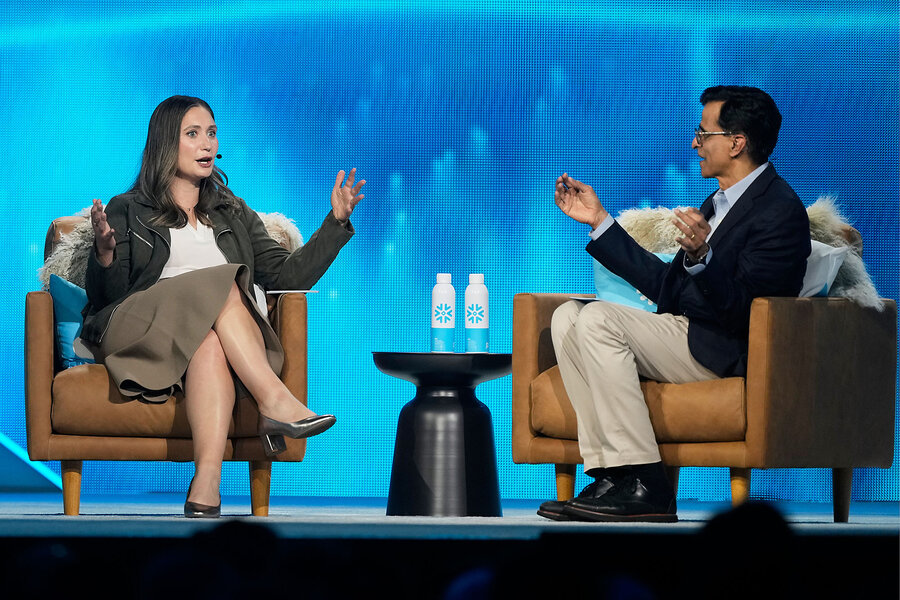
Anthropic and government face off again over AI . But they need each other. (opens in new tab)
Anthropic is engaged in regulatory discussions with the U.S. government over export controls related to its latest AI models. The government imposed restrictions after fears that the models could be used for cyberattacks, forcing Anthropic to suspend access. The outcome of these talks may affect how AI innovation aligns with national security measures.
- 03
Who decides when AI is too dangerous? (opens in new tab)
The US government imposed export controls on Anthropic's new AI model, Fable 5, just days after its release. In response, Anthropic took both Fable and its underlying Mythos model offline due to concerns about compliance. This situation raises significant questions about the government's role in AI regulation and its impact on the technology sector.

Industry & Models
- 01
New usage analytics and updated spend controls for enterprises (opens in new tab)
OpenAI released new usage analytics and updated spend controls for ChatGPT Enterprise today. These tools help organizations track credit usage and understand spending patterns, empowering them to manage AI investments more effectively. Admins can also set custom credit limits, allowing for more tailored controls based on team roles.
- 02
Demis Hassabis Thinks We're in the 'Foothills of the Singularity' (opens in new tab)
Demis Hassabis, CEO of Google DeepMind, stated that humanity is nearing a significant breakthrough in artificial general intelligence (AGI). His remarks highlight the ambitious goals set by DeepMind, including the development of systems that could address complex global challenges. As AGI progresses, the implications for various industries could be profound.

Sectors & Applications
- 01
Improving health intelligence in ChatGPT (opens in new tab)
OpenAI released GPT-5.5 Instant, enhancing ChatGPT's health intelligence by improving its ability to recognize urgent care needs and explain complex information. This update allows over 230 million weekly users to access better responses for health and wellness inquiries. A global network of physicians evaluates and shapes these improvements, ensuring the model meets real-world health needs.
Research
- 01
[2606.19464] Deontic Policies for Runtime Governance of Agentic AI Systems (opens in new tab)
Researchers propose a new governance model for autonomous AI systems using what they call deontic policies. This approach addresses gaps in existing policy engines by managing obligations and resolving conflicts, enhancing security and compliance in complex environments. The proposed system will be presented at the 2026 IEEE Symposium on Agentic Services.
![[2606.19464] Deontic Policies for Runtime Governance of Agentic AI Systems](https://arxiv.org/static/browse/0.3.4/images/arxiv-logo-fb.png)
- 02
[2606.19501] DeXposure-Claw: An Agentic System for DeFi Risk Supervision (opens in new tab)
Researchers introduced DeXposure-Claw, an agentic system designed to supervise decentralized finance (DeFi) risks. This system uses a foundation model to analyze credit exposure networks and aims to reduce false alarms in regulatory interventions. The team conducted experiments using five years of real data to validate its effectiveness.
- 03
[2606.19527] Emergent Alignment (opens in new tab)
A new paper introduces a method for Large Language Models (LLMs) to self-correct misalignment with human ethics. This approach enhances model training by incorporating an alignment component, allowing for ethical outputs in various applications. The findings suggest that LLMs can avoid unethical behaviors observed in previous work by asking a high-level introspective question during training.