AI TodayGet the app

Hardware & Chips

Curated AI news · 24 stories

Business & Enterprise

CoreWeave looks to Wall Street to hedge memory chips, an asset with no market

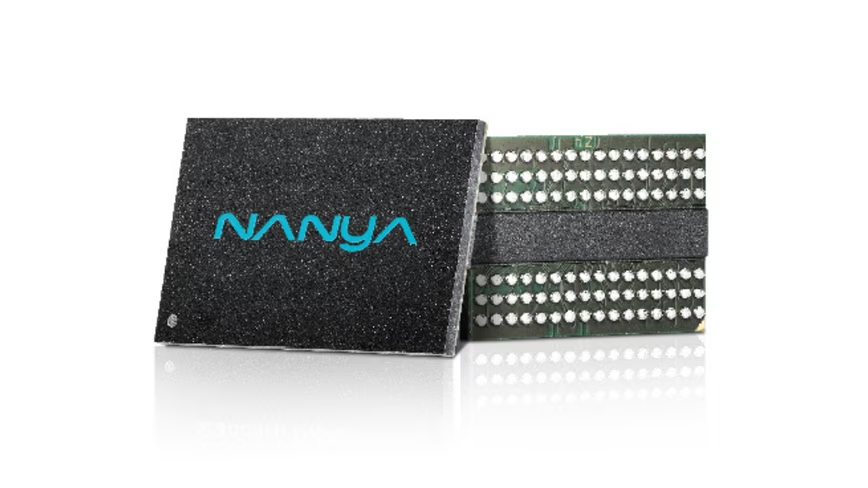
CoreWeave, an AI cloud company, is considering financial derivatives to hedge against potential future declines in memory and storage chip prices, which have recently surged significantly. The company faces exposure due to long-term supply agreements with chip manufacturers that include price floors, protecting suppliers but potentially leading to overpayment if prices drop. This situation arises amid a volatile memory chip market where prices have nearly doubled this year, impacting data center

AI Research

OpenAI’s first Jony Ive device is a screen-free speaker built to feel alive

OpenAI is launching its first consumer hardware device designed with Jony Ive, a mobile, screen-free smart speaker intended to act as a proactive, humanlike companion in the home. The device features mechanical elements to simulate liveliness, includes sensors and a camera to understand its environment, and uses an advanced voice AI system to interact naturally. This product aims to enhance productivity by anticipating user needs and integrating with smart home functions, marking OpenAI's entry,

Hardware & Chips

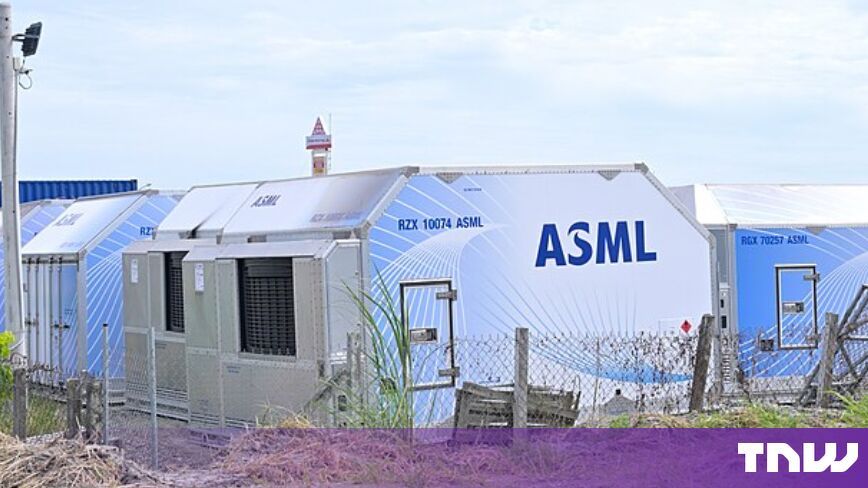
ASML’s $400M chipmaking machine just shipped its first laptop processors

ASML's $400 million High NA EUV lithography machine has been used for the first time in volume manufacturing of Intel's Panther Lake laptop processors, which are based on the Intel 18A node. This technology, originally planned for a later node, allows higher resolution patterning in fewer steps, potentially reducing costs and improving precision. However, the layers patterned by High NA are also qualified for older machines, indicating the new tool is currently supplementing existing processes.

AI Research

The OpenAI Mystery Device Will Reportedly Be Basically Just a Smart Speaker

Reports suggest that OpenAI's upcoming physical device will be a portable, battery-powered smart speaker capable of controlling smart home appliances and featuring mechanical components that allow it to move, creating an impression of being "alive." This device may blend features of a smart speaker and a phone, and its development is linked to OpenAI's acquisition of Jony Ive's design company. Meanwhile, Apple has sued OpenAI over alleged trade secret misappropriation related to talent poaching.

AI Research

Lorde says AI glasses are ‘not sexy’

At a recent music festival, pop star Lorde criticized AI-powered smart glasses, calling them unappealing and expressing concerns about their impact on privacy and reality perception. Despite such criticisms and ongoing privacy lawsuits against Meta, the Ray-Ban Meta AI glasses have seen strong sales and continued product expansion. Lorde's remarks highlight growing public skepticism about AI glasses amid their increasing market presence.

AI Research

OpenAI’s first hardware device is reportedly a screenless speaker that can move

OpenAI is reportedly developing its first hardware device, a screenless mobile smart speaker with AI capabilities that can sync with ChatGPT and act as a personalized home companion. The device is said to have mechanical elements that allow it to move and learn about its owner over time, aiming to provide a unique interactive experience. This development comes amid legal disputes with Apple, which has accused OpenAI of trade secret theft, though OpenAI denies these claims.

AI Research

OpenAI pushes back on Apple trade secret lawsuit

OpenAI has denied Apple's allegations in a trade secret lawsuit accusing OpenAI employees of misappropriating confidential information. Apple alleges that OpenAI used this information to develop competing hardware products, while OpenAI maintains it has no interest in other companies' trade secrets and focuses on innovation. The dispute arises amid reports that OpenAI is developing a new smart speaker device potentially competing with Apple.

AI Research

OpenAI may announce a ChatGPT smart speaker this year

OpenAI is reportedly planning to release its first hardware device, a smart speaker without a screen that integrates ChatGPT and uses sensors and a camera to interact with its environment. The device is expected to feature a rechargeable battery, smart home controls, media playback, and advanced voice capabilities, with a launch targeted for 2027. This development comes amid a legal dispute with Apple and follows OpenAI's acquisition of a design company led by Jony Ive.

Hardware & Chips

Nintendo is pulling a console from Europe over battery rules. Meta’s glasses just got exempted from them.

The European Commission has exempted wearable devices like smart glasses from a regulation requiring user-removable batteries, facilitating Meta's smart glasses entry into the EU market. This exemption contrasts with other products, such as Nintendo's Switch console, which must comply with the battery rules or be withdrawn. The decision followed a formal process involving expert assessments and consultations, and the batteries must still be replaceable by professionals.

AI Research

Sam Altman didn’t need another lawsuit

OpenAI is facing a significant lawsuit from Apple alleging that former Apple employees who joined OpenAI stole trade secrets related to Apple's hardware operations. The complaint highlights concerns over confidential product development and claims that these secrets are among Apple's most valuable assets. This legal challenge adds to OpenAI's ongoing series of lawsuits and regulatory hurdles amid its rapid growth and hardware ambitions.

Hardware & Chips

Tower Semiconductor puts $3bn into Japan, and Tokyo is paying for a third of it

Tower Semiconductor plans to invest about $3 billion in expanding its 300mm semiconductor operations in Japan, focusing on silicon photonics and related technologies critical for AI data centers. The Japanese government is supporting this expansion with approximately $1 billion in grants, and the project includes upgrading existing facilities and potentially building a new plant to significantly increase production capacity by 2027-2029. This move is part of an industrial partnership with Japan,

Hardware & Chips

Intel commits $5.7bn to Xeon production in Ireland

Intel is investing approximately $5.7 billion to upgrade its semiconductor fabrication facilities at the Leixlip campus near Dublin, focusing on enhancing production of Intel 3 silicon for Xeon processors used in servers and AI applications. The upgrade aims to integrate existing modules into a unified production environment, with most spending planned by the end of 2027 and the creation of several hundred new jobs. This investment supports the European Union's goal of technological sovereignty,

Hardware & Chips

China smartphone shipments fall for a fifth quarter as memory costs bite

Smartphone shipments in China have declined for the fifth consecutive quarter, dropping 4.3% in Q2 due to rising memory and component costs leading manufacturers to increase prices. Huawei and Apple were the only vendors to grow shipments by maintaining stable prices, while others like Xiaomi, Oppo, and Vivo saw significant declines. The global smartphone market is also expected to contract sharply in 2026, influenced by similar cost pressures and reduced demand.

Hardware & Chips

Nvidia builds a white list: more than half of its Asian customers are off it

Nvidia has significantly reduced its approved customer list in Asia for purchasing its AI chips, excluding over half of previous buyers following increased scrutiny and pressure from the U.S. government. This move aims to prevent chip diversion to China through proxy companies and aligns with tightened U.S. export controls requiring licenses for shipments to entities ultimately owned by Chinese or Macau-based firms. The new whitelist approach shifts enforcement from monitoring individual chip sh

Hardware & Chips

Intel is putting 5 billion euros into Ireland, and Europe just got one of the few EUV fabs on the continent

Intel is investing 5 billion euros to expand its Leixlip campus in Ireland, focusing on Fab 34, one of Europe's few extreme ultraviolet lithography (EUV) facilities. This expansion aims to increase production of Xeon server processors used in AI and high-performance computing, adding several hundred jobs by the end of 2027. The investment supports AI infrastructure but does not directly compete with AI accelerator chips like Nvidia's GPUs.

Business & Enterprise

Sam Altman’s space data center trash talk is what most experts already believe

Sam Altman and Elon Musk exchanged critical remarks regarding the feasibility of space-based data centers, highlighting skepticism among experts about their near-term viability. While SpaceX's ambitious plans hinge on the success of the Starship rocket for cost-effective launches, industry consensus suggests that scalable and economical space data centers are unlikely until significant advancements in rocket reusability and satellite production occur, potentially not until the 2030s.

AI Research

The 6 wildest claims in Apple’s lawsuit against OpenAI

Apple has filed a lawsuit against OpenAI alleging that former Apple employees who joined OpenAI stole confidential information and hardware prototypes. The suit claims that these individuals retained Apple devices, accessed secure networks without authorization, and shared proprietary documents to aid OpenAI's development of AI hardware. The case centers on three former Apple staff members now at OpenAI and accuses them of an ongoing scheme to misappropriate Apple's trade secrets.

Hardware & Chips

The AI boom broke the memory market, and the bust could be brutal

The surge in AI development has disrupted the traditional memory market cycle, causing prices for DRAM and NAND flash to rise instead of fall, with shortages expected to persist until around 2028. Major memory manufacturers are investing heavily in new production facilities, but these will take years to become operational, leading to increased costs for downstream industries and AI companies. This prolonged supply constraint is impacting the broader electronics market and AI infrastructure costs

AI Research

Apple’s lawsuit is already hurting OpenAI, long before a verdict

Apple has filed a lawsuit against OpenAI alleging theft of hardware trade secrets, which is causing operational disruptions at OpenAI even before any legal verdict. The lawsuit compels OpenAI to implement stricter legal and internal controls, potentially slowing its development of hardware products, including an anticipated iPhone rival. The case also highlights significant employee movement from Apple to OpenAI, intensifying concerns over intellectual property and competitive advantage.

Business & Enterprise

Raxio raises its funding pool to $380m and heads for Tanzania

Raxio Group, a pan-African colocation data center operator, has increased its funding to $380 million and is expanding into Tanzania with a new facility in Dar es Salaam. The company aims to meet growing demand for high-quality data infrastructure driven by digital adoption, cloud migration, and AI workloads across Africa, positioning itself to serve international cloud providers entering the region. African data center capacity is projected to grow significantly by 2030 due to increasing data需求

Hardware & Chips

TSMC breaks ground on more advanced packaging fabs in Chiayi

TSMC is expanding its advanced packaging facilities at the Chiayi Science Park in southern Taiwan, adding three new fabs in Phase II to meet growing demand for high-performance computing chips, particularly for AI applications. The expansion aims to create a packaging cluster that will significantly boost annual output and employment, connecting with other regional science parks to form a comprehensive semiconductor corridor. This development coincides with TSMC's record second-quarter revenue,

Hardware & Chips

Samsung pulls its first Yongin chip plant forward to 2029

Samsung Electronics plans to start operations at its first chip manufacturing plant in the Yongin National Industrial Complex by 2029, advancing the timeline by one to two years from earlier projections. This acceleration aligns with South Korea's national strategy to boost semiconductor production amid growing global demand for AI chips, with Samsung and other Korean memory makers investing heavily in new facilities. The move is part of a broader $880 billion commitment to expand chip, data, AI

Hardware & Chips

2028 Could Bring the Most Mind-Bendingly Expensive Apple Product of All Time

Apple is reportedly accelerating its chip development by skipping the M6 variants and focusing on the M7 generation, with M7 Ultra-powered desktop Macs expected in 2028. The M7 Ultra is anticipated to support up to 1.5 terabytes of memory, potentially making it a very high-cost product amid current memory chip shortages. This shift highlights AI's growing influence on Apple's product design and release timelines, moving beyond traditional priorities like processing speed and battery life.

Hardware & Chips

Apple’s failed self-driving car program left a legacy of powerful AI chips

Apple's discontinued self-driving car project led to the creation of the Neural Engine, a specialized AI chip that powers on-device processing in products like the iPhone and Mac computers. This hardware innovation has become central to Apple's AI strategy, enabling privacy-focused features by minimizing cloud data usage. The company plans to advance this technology with upcoming M7 chips, including a server variant supporting large memory capacities.