AI TodayGet the app

Robotics

Curated AI news · 24 stories

Robotics

‘Listing is a must’: China’s LimX raises $200m as the humanoid IPO race heats up

LimX Dynamics, a Shenzhen-based humanoid robot startup founded in 2022, has raised $200 million at a $2.21 billion valuation and is preparing for an IPO, likely in Hong Kong. The company is part of a rapidly growing Chinese humanoid robotics sector, with significant investment and a race among firms to go public amid strong domestic and international demand. LimX notably has over half of its orders coming from overseas markets, including plans to expand shipments to the Middle East.

Robotics

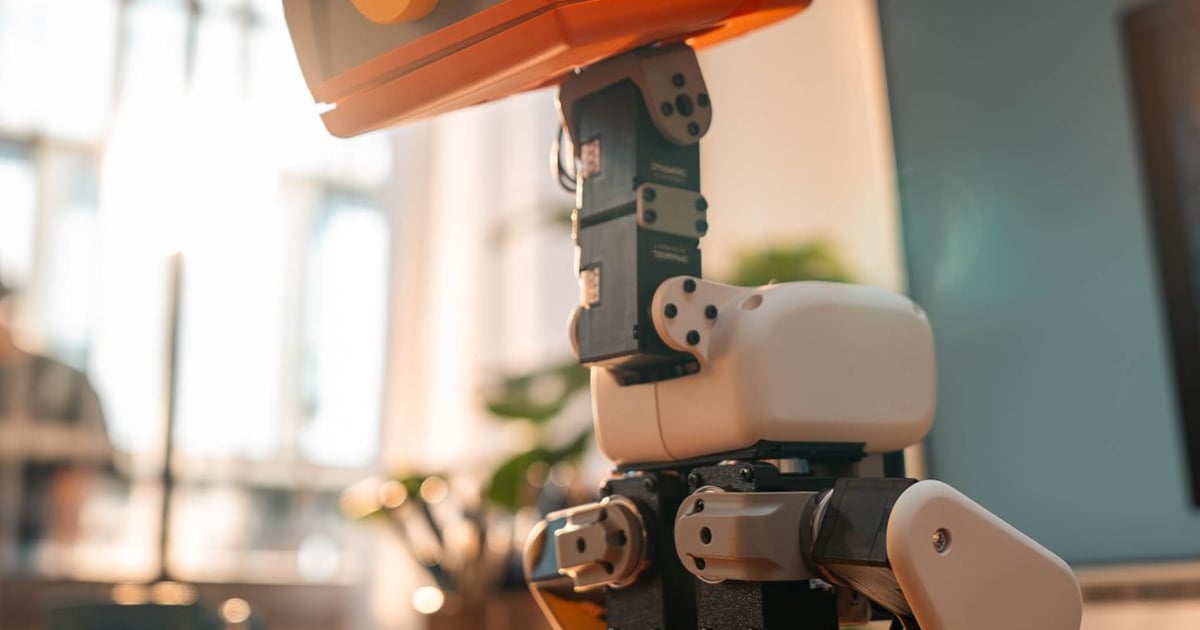
Home robots already walk. 1X’s new hands try to solve the part that actually matters

1X has developed advanced robotic hands for its NEO home robot, featuring 25 joints and tactile sensors that enable delicate and precise manipulation of objects, such as detecting slippage to adjust grip. While the hardware shows promise for household tasks, challenges remain in autonomous object recognition and task execution, with current solutions involving remote human operation. The company, originating from Norway, is part of a competitive European humanoid robotics landscape exploring the

Robotics

Humanoid robots just removed organs from live animals for the first time

Researchers at the University of California San Diego successfully used two teleoperated humanoid robots to perform gallbladder removal surgeries on live pigs, marking the first instance of humanoid robots conducting surgery on living subjects. The robots, adapted from a general-purpose humanoid platform, were controlled by human surgeons and demonstrated precision and safety comparable to specialized surgical systems, but at a significantly lower cost and smaller size. This development suggests

Robotics

Alipay’s owner just open-sourced an entire robot brain in a single week

Ant Group's robotics division, Robbyant, open-sourced LingBot-World 2.0, an AI system that generates an interactive 3D game-like world capable of running continuously for an hour at high visual quality. Over the course of a week, Robbyant released several components of a comprehensive robot brain, including vision-language-action and depth perception models, trained on extensive real-world data and designed for robotics applications. These releases represent a significant contribution to the AI-

Robotics

Robots swept RoboCup 2026, and they’re coming for the human World Cup by 2050

At RoboCup 2026 in Incheon, teams using humanoid robots from Beijing's Booster Robotics dominated all three football divisions, highlighting a shift from building custom robots to focusing on software and coordination. The event marked a milestone with two full teams playing 11-a-side matches, advancing toward RoboCup's goal of robots beating human World Cup champions by 2050. This progress reflects broader developments in embodied intelligence and robotics hardware reliability.

Healthcare

A startup just 3D-printed kidney and liver tissue in space, a first

Auxilium Biotechnologies has successfully 3D-printed kidney, liver, cartilage tissue, and nerve-repair implants aboard the International Space Station, marking the first time multiple tissue types were produced in orbit. While these are small tissue samples rather than transplant-ready organs, the microgravity environment allows for better cell distribution, benefiting research such as drug testing using organoids. The company aims to leverage this technology for future commercial space stations

Automotive

This EU-first robocar tests at 120 km/h, and uses no AI to drive

Aidoptation has received the first Level 4 permit in the European Union to test a fully self-driving car at highway speeds up to 120 km/h on Belgian public motorways. Their vehicle, a Maserati GranTurismo Folgore equipped with lidar, radar, and cameras, operates without AI by using deterministic models for decision-making, aiming to improve safety and regulatory transparency. Testing includes a human safety driver and is supported by local authorities and insurers, marking a significant step for

Military

NATO is building an AI ‘Kill Web’ to stop a Russian attack before it starts

NATO is developing an AI-driven integrated defense network called the Eastern Flank Deterrence Initiative to detect and respond rapidly to potential Russian attacks along its eastern border. This system, termed the "Kill Web," connects various sensors and unmanned systems to enable faster decision-making and automated initial responses, aiming to protect human troops by deploying machines first. The initiative incorporates lessons from the Ukraine conflict and involves multiple defense industry,

Robotics

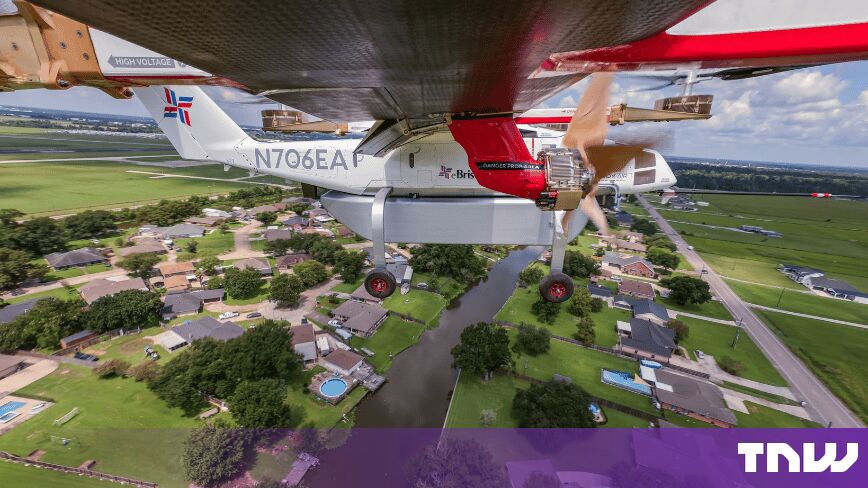
Irish drone delivery startup Manna is building a 1,000-person US factory in Tulsa to take on Zipline and Wing

Irish drone delivery company Manna is establishing a large manufacturing and operations center in Tulsa, Oklahoma, aiming to employ around 1,000 people and expand its US presence to six cities by 2027. The company plans to compete with major players like Zipline, Amazon, and Wing, leveraging recent venture capital funding and favorable US regulatory conditions. Manna has scaled back operations in Ireland due to regulatory challenges and is focusing on the US market for growth.

Robotics

This startup thinks robotics is about to have its ChatGPT moment

General Intuition, a startup led by CEO Pim de Witte, is developing foundation models for robotics inspired by the success of large language models like GPT-3. By training on millions of hours of video game data, their model can generalize spatial-temporal reasoning and transfer skills across different robotic embodiments with minimal real-world data. The company recently raised $320 million, aiming to provide foundational AI models for physical robots rather than building robots themselves.

Robotics

Fi’s new collar taps Starlink’s direct-to-cell to track dogs off the grid

Fi has introduced the Fi Ultra, a smart dog collar that uses SpaceX's Starlink direct-to-cell satellite network to provide tracking even in areas without mobile tower coverage. This technology enables continuous location tracking by connecting directly to satellites, overcoming the limitations of traditional GPS trackers reliant on ground-based LTE networks. The device targets a growing pet wearables market and exemplifies the expanding use of satellite connectivity beyond phones.

Robotics

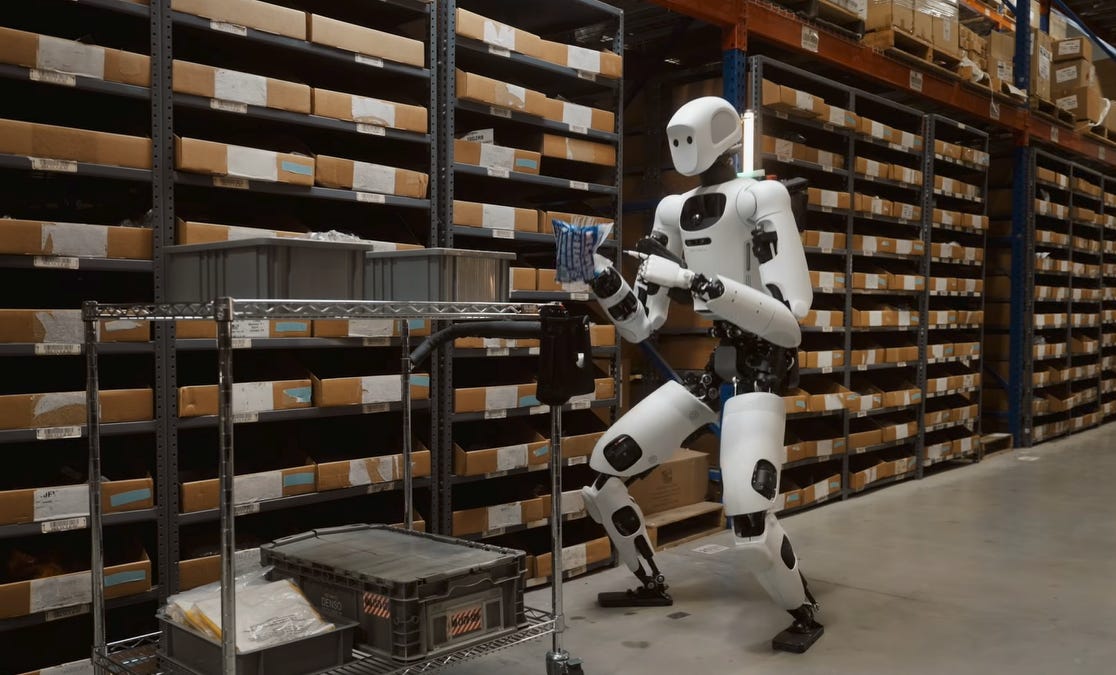
Nomagic’s warehouse robots got an AI brain, and it halved the calls for human help

Nomagic, a Warsaw-based robotics company, has implemented a vision-language-action AI model in live warehouse operations, reducing the need for human intervention by about half. Their approach focuses on mastering specific tasks before aiming for a general robotic brain, combining AI with traditional software to ensure safety and reliability. This deployment marks one of the first real-world uses of such AI models in warehouse robotics.

Military

Russia tries to jam Starlink to counter Ukraine’s long-range drones

Russian forces are attempting to disrupt Ukraine's use of Starlink satellite internet by deploying jammers like the Volna Kupol Garant to interfere with drone communications. These jammers affect a significant area, aiming to neutralize Ukraine's long-range drones that rely on Starlink for control and video transmission. Ukraine has responded by destroying some jammers and exploring alternatives to reduce dependence on a single network.

Robotics

Former OpenAI exec Kevin Weil is now on the board of Stoke Space
Kevin Weil, a former executive at OpenAI and other tech companies, has joined the board of Stoke Space, a Seattle-based startup developing fully reusable rockets to compete with SpaceX. Weil has been an early investor and advisor, helping Stoke raise significant funding, including a $510 million Series D round in 2025. Stoke aims to build the Nova rocket, which can be flown multiple times, a feat not yet achieved by others in the industry.

Robotics

Waymo’s robotaxis stalled, snarled traffic, and drove into fireworks on July 4

Waymo's autonomous taxis experienced significant operational issues during the July 4 holiday, including running out of battery, causing traffic congestion, and one vehicle catching fire after driving over fireworks. These incidents occurred in San Francisco and Atlanta amid heavy crowds and road closures, leading to criticism from safety advocates who call for stricter regulations. Waymo attributed the problems to severe congestion and maintained that no injuries occurred and the vehicles were,

Robotics

Over 100 US-built autonomous ATVs have been fighting in Ukraine for nine months

Since October, over 100 US-made autonomous all-terrain vehicles (ATVs) by Forterra have been deployed in Ukraine, completing more than 1,100 missions including cargo transport and casualty evacuations. These gas-powered vehicles, based on Polaris ATVs, represent the largest US combat unmanned ground vehicle deployment and are primarily teleoperated due to current autonomy limitations. The deployment is part of US defense support for Ukraine, with ongoing efforts to enhance vehicle autonomy using

Robotics

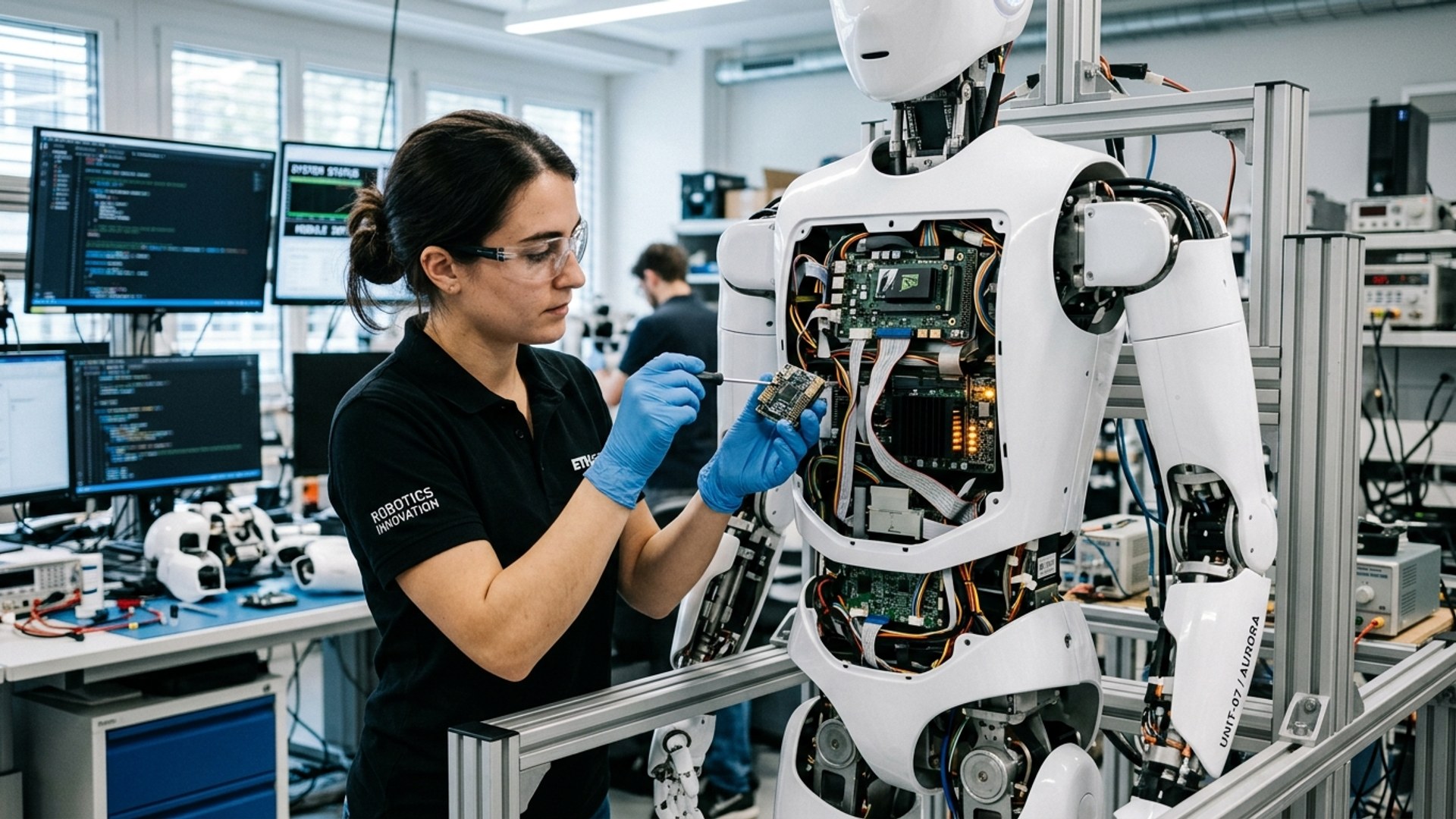
Ex-Tesla Optimus scientist launches UMA to build Europe’s humanoid robot

Rémi Cadene, a former Tesla scientist involved in the Optimus robot project, has founded UMA, a Paris-based startup developing Northstar, a lightweight AI-powered humanoid robot aimed at industrial and domestic applications in Europe. UMA has engaged with around 50 potential customers and assembled a founding team with strong AI and robotics backgrounds, supported by notable investors and advisors. The company seeks to establish a European presence in humanoid robotics before expanding globally.

Robotics

The first American autonomous ground vehicles are fighting in Ukraine

Forterra, a US company, has deployed over 100 autonomous all-terrain vehicles in Ukraine's conflict zones over the past nine months, marking a significant use of autonomous ground vehicles in combat. These gas-powered vehicles can carry heavier loads than Ukraine's own battery-powered UGVs and have been adapted with features like satellite internet to better suit battlefield needs. The deployment is part of US defense efforts to support Ukraine against Russian forces and reflects evolving combat

Robotics

LeRobot v0.6.0: Imagine, Evaluate, Improve

LeRobot v0.6.0 is a robotics software update introducing advanced world model policies that enable robots to anticipate future scenarios, alongside new vision-language-action models and reward model APIs to assess robotic success. The release also includes six new simulation benchmarks, improved dataset handling with depth support and language annotations, enhanced training capabilities including cloud support, and a streamlined codebase with deployment tools for human-in-the-loop corrections.

Robotics

China wants to solve the hardest problem in robotics – making hands

Chinese companies are focusing on developing highly dexterous robotic hands to overcome one of the biggest challenges in robotics, aiming to create humanoid robots capable of performing complex tasks. This effort aligns with China's strategic emphasis on "embodied AI" to address economic challenges like an aging workforce and to unlock new market opportunities. Despite rapid growth in factory automation, truly versatile humanoid robots remain a distant goal due to the complexity of replicating a

Robotics

Weave’s $7,999 Isaac 1 bets home robots don’t need legs or fingers

Weave Robotics has introduced Isaac 1, a home robot designed to perform specific household tasks like laundry and tidying without humanoid features such as legs or fingers. Priced at $7,999, it offers a more affordable alternative to other home robots by using a wheeled base and simple claws, though its autonomy is limited and it currently ships only in California. The robot's capabilities and privacy implications have sparked mixed reactions online.

Industry & Manufacturing

The other Dyson empire, measured in acres

Dyson, widely known for its vacuum cleaners and household gadgets, also operates one of Britain's largest farming businesses, Dyson Farming, managing around 36,000 acres across several counties. The company applies its engineering expertise in robotics and digital motors to agriculture, using automated systems like robotic strawberry pickers and UV light treatments to optimize farming processes. This integration reflects founder Sir James Dyson's vision of owning and innovating across entire, un

Robotics

Dutch military backs Intelic’s drone software with tens of millions of euros

The Netherlands Ministry of Defence has invested tens of millions of euros in Intelic, a Dutch startup developing the NEXUS platform that enables drones from various manufacturers to be controlled under a unified system. This three-year partnership aims to improve coordination of uncrewed systems across the armed forces, inspired by lessons learned from the conflict in Ukraine. Intelic's software has reportedly been used in Ukrainian operations, highlighting the growing need for interoperable Ux